



This chapter chronicles the adventures, struggles, and personal discoveries of my years as a carpenter—the experiences that inspired this website. While mycarpentry.com is about carpentry, these chapters are about the carpenter.
Carpenter or Millwright
1985
Through on-the-job experiences, I discovered similarities between the carpenter and millwright trades. The carpenter, who primarily works on residential projects, and the millwright, who is more oriented toward commercial and industrial construction, share many common ideas, skills, and methods of building.
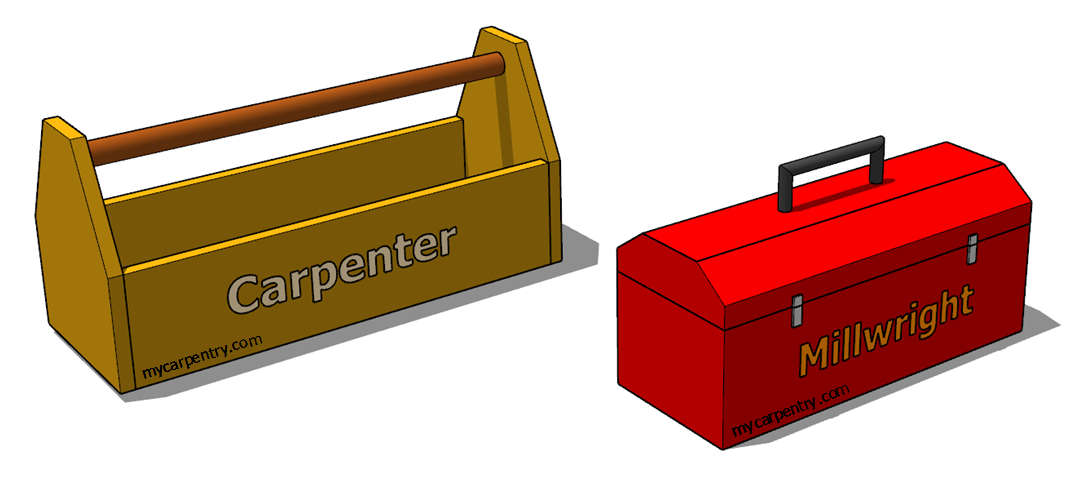
I returned home from a not-so-relaxing day at the lake to discover my new four-legged companion, Weiser, had chewed away the bottom of the 1x4 wood casing surrounding the back door to my garage. My unsuspecting landlord would never have approved of me adopting a pet, let alone a Labrador Retriever, without discussing a security deposit. But I was a carpenter, then between jobs, and thought I would repair the damage myself before my landlord's next visit.
After coffee and toast the following morning, I walked out to my garage to hunt for scrap material to rebuild the door trim. My garage was a disorganized wreck. There was no excuse for the clutter - it wasn't like I had gainful employment to occupy my time. I will restore order to my garage before I do anything else. It didn't take long. In less than an hour, I had cleared the debris, repaired the door trim, and swept the floor clean.
After working in the garage, I noticed my lawn was high and the hedges needed trimming. Without delay, I gassed up my mower and went to work. Mowing is always a good time to think. The day at the lake might have been more relaxing had I knocked out some of my responsibilities beforehand.
It had been four years since I left the stability of working as a phlebotomist in a climate-controlled hospital for the unpredictable field of residential carpentry. During that time, I was primarily a carpentry subcontractor, but on some projects, I was an hourly employee. When the work was steady, so was the money. But workdays were at the mercy of the weather (and other influences). Too many inclement days can disrupt your work schedule and wallet.
I finished mowing the front yard, trimmed all the hedges, and it was time to cut the back.
Another impact on my workdays was the '71 VW Van I had parked in my driveway; it had become too unreliable as a work truck. Since I owned it, I had rebuilt the engine twice and would soon need to do so again. I had to work on it every weekend to ensure dependable transportation during the week. But I could only afford a new vehicle if I had verifiable, stable employment to make the payments.
With yard work out of the way, I began to focus on the inside of my house. I cleared the floor of dirty laundry and tossed it into the washer. Afterward, I removed last night's dishes from my dining room table, emptied the ashtrays, and threw the beer cans into the garbage. With the clutter out of the way, I vacuumed and mopped the floors.
It was time I searched for a more stable and diverse line of carpentry work. I didn't know much about commercial carpentry, but I knew of jobs where carpenters constructed non-load-bearing partition walls inside self-supporting steel structures. In extra-large office complexes, a commercial carpenter could stay warm in the winter and cool in the summer while not missing a single day of work due to a passing shower. I was confident I could master commercial carpentry skills despite having no particular experience. The framing materials used in commercial construction differed from those in residential work - metal studs instead of wood - but the building concepts were the same. A 4x8 sheet of sheetrock in residential construction is the same as in the commercial world.
With my house restored to a respectable condition, inside and out, I took a shower, put on clean clothes, and planted myself in front of a newspaper at my dining table to search the employment section for reliable construction work.
***
There were no ads for commercial carpenters in the paper, so I browsed my phonebook for what appeared to be a reputable construction company - reputable, meaning that they were willing to pay for a bold-typed listing in the 'Yellow Pages.' I paced the floor until I mustered the nerve to call the first listing.
Area General Contractors, how can I help you?"
"Uh, yes, uh, hello, my name is Matt. I have five years of experience as a residential carpenter, and I am hoping to move into a commercial carpentry position. Can you connect me to someone in your personnel department?"
It wasn't the keenest introduction, but not bad, given that I hadn't rehearsed.
"Hello, Matt. My name is Charles Beckett. I can help you. What kind of experience do you have?"
"Hello Charles, I have extensive experience with residential construction, building just about everything from stairs to roofs but I haven't done any commercial work yet. The most important thing I am looking for in a job is stability and steady work."
"Well, Matt, you called the right place. We do lots of work for a large mainframe server manufacturer and are looking for a new man since our lead carpenter injured his leg last week; he will be out of commission for a while. When can you start?"
"I can start now, Charles, if you need someone today."
"I appreciate that, Matt, but tomorrow will be fine. Meet me at our office on Burnet Road tomorrow at 7:00 a.m., and we'll get you started."
"Perfect. I will see you tomorrow."
That was easier than I thought, although it would have been better if I had written out what I had planned to say in advance. I was lucky.
The next day, I drove to the address Charles provided. AGC's headquarters was a small two-office/warehouse partition in one of the older industrial parks in Austin, north of 183 and east of Burnet Road. I parked my VW van, poked my head in the main door, and walked into an ugly room without climate control. There was no flooring, just bare concrete, and the yellowed sheetrock walls were marred and stained. There was an old metal desk in the middle of the room with dirty tools, papers, and receipts scattered on top. And a broken office chair with a dog-eared phone book, and a soiled rotary-dial phone resting in the seat. A rusty, banged-up filing cabinet stood in one corner with torn rolls of smudged blueprints leaning against it. It was the wretched office of an unorganized slob.
Suddenly, a gentleman appeared from the office's single restroom.
"Are you Matt?"
"Yes...Charles?"
"Yes. Pleased to meet you in person, Matt. I apologize for the mess. This squalid office belongs to Bill," Charles said with disgust. "You will meet him soon enough."
"Where is everyone?" I asked.
"They are on jobs at various locations. No one works in this building. We mostly use it to store our tools and equipment unless it is easier to pre-fabricate some contraption here, rather than on site. You and I are meeting one of those customers this morning. Do you want a cup of coffee before we head out?"
"No thanks, I am fine."
He and I rode in his clean, uncluttered late-model white Ford pickup truck to one of the customer's buildings to meet an engineer and discuss a solution for remediating high-pitched sound waves emanating from their pneumatic delivery system.
Charles used a badge hanging from his neck to access the building through the front door. We met a big man in the lobby wearing an overstretched plaid button-down shirt with a pocket protector that had poked holes through the bottom of the pocket it was supposed to protect.
"Good morning, Charles," said the big fellow. "it is good to see you again. Who is the young gentleman with you."
"Good morning, Bob, yes, this is Matt. He's a new millwright who joined our team this morning. He will be working on your project."
"It is good to meet you, Matt."
"It is good to meet you too, Bob," I said, wondering what a millwright was.
"Why don't you two follow me and I'll show you what we have in mind."
Charles and I followed Bob into a large utility room with four giant turbo air compressors juxtaposed on steel and concrete foundations. Bob's engineering team discovered that the problematic sound waves radiated from two turbines attached close to the top of each machine. Through extensive testing, their engineers found that a foam-like material, wrapped tightly around the turbos, would dampen the ear-damaging high-pitched sound. They wanted us to fabricate custom sheet metal covers with the foam material affixed to the inside surface, shaped to wrap impermeably around the turbos.
"What do you think, Charles and Matt? Can you manufacture these shrouds?"
"Yes," Charles replied. "Once we have the foam material, we should be able to fabricate the covers in a couple of days."
"Excellent," Bob said. "We have to order the foam; it might take a few days."
"Just let us know when it arrives and we'll get started," Charles said.
Charles and I drove back to the office, where he gave me a tour of their building. Beyond the two front offices and solitary restroom was a modest shop the size of a six-car garage with high ceilings. Steel shelving stocked with tools, metal studs, and various sizes of red-iron steel lined the lengths of both side walls. Opposite the rear office wall stood a workbench with a chop saw mounted between two 10-foot sections of conveyor rollers and a drill press bolted to the right end. The shop was cleaner and better organized than Bill's office.
"What do you think about the Bob's project, Matt?"
"Once we see what this foam looks like and how thick it needs to be, we will have the details we need to design the shrouds," I said. "It might take a few tries to figure out the perfect shape for the sheet metal, but once we get it right on the first one, the others should be easy."
"I'm thinking the same thing," Charles said. "Bob said it would take a few days to order the material, so while we are waiting, I want you to meet Jeff, our foreman, tomorrow morning. He is building partition walls in one of our customer's new offices. You can work with him until we hear from Bob. Bring your screw gun, if you have one."
"Sounds good, Charles. Is that it for today?"
"Yes, Matt. I'll see you here tomorrow morning at 7:00 a.m., and get some rest. We have lots of work to keep you busy."
Charles was the company president, and Bill, whom I have yet to meet, was the vice president. Area General Contractors was a small subsidiary of Area General Constructors. The latter primarily built steel structures, whereas the former focused on installing factory equipment, erecting partition walls, and rigging conveyor systems.
I left the building, wondering what a screw gun was, and decided to stop by my buddy Jerry's tool repair shop on the way back to my house to see if they had any. Jerry usually had old tools that they had repaired, but the customers never picked them up.
"Hey, Jerry," I said as I walked through the front door of the tool repair shop. "How is life treating you?"
"I can't complain," he said. "How can I help you, Matt?"
"I'm looking for a screw gun. Do you have any?"
"For sheetrock?"
"Yes, I think."
"Follow me," Jerry said as he proceeded down a hallway. "We have lots of them."
We came to a bin full of used tools with their power cords securely wrapped around the motors. I found a Makita with a nose cone and a Milwaukee without one.
"I can let you have the Makita for ten dollars, and I'll throw in the Milwaukee for free since it is missing its cone. You can use the Makita for hanging sheetrock and the Milwaukee for framing walls."
"Well, I can't pass up a deal like that," I said. I paid the man and headed for the door.
"Thanks, Mr. Jerry. I sure appreciate it."
"See you next time, Matt. Don't be a stranger."
***
I woke up at 6:00 a.m., made scrambled eggs and toast for breakfast, then loaded my new screw guns and the rest of my tools into my VW van.
When I arrived at the office, Charles introduced me to his foreman.
"Jeff, I want you to meet Matt. He will be taking Mark's place while he is recovering. I want him to work with you today."
"Hello, Matt."
"Hello, Jeff."
"Matt has lots of experience with residential framing and wants to learn the commercial side. His experience will be an asset for our crew," Charles said. "I want you to teach him everything you know."
"That won't be hard and won't take long," Jeff said with a chuckle. "Matt, follow me in your vehicle to the job site. It is about 15 minutes away."
"Will do," I said.
At the location, we parked close together in the middle of a large parking lot. I strolled to Jeff's truck to help him carry his tools into the building.
"Oh crap," Jeff said as we arrived at the main door. "I forgot my level. Here are my keys. Go back to my truck and get it."
"Sure," I said, fast-walking back to his truck.
"Run!" he hollered.
"What?" I said, looking over my shoulder like I thought he was kidding.
"Run! We don't have all day!"
I switched from a fast walk to a slow trot, not wanting to give in completely. If I hadn't needed the job so desperately, I would have said, "You forgot your level. It should be you running back after it." But I kept my tongue. It was my first taste of "manager-bullying."
When I returned with Jeff's 4-foot level, he led me to a spacious room where his small crew was building partition walls with non-structural metal studs.
The concept of building walls with metal studs was similar to that of wooden walls, except the framing materials and nomenclature were different.
Building walls in residential construction starts with a wooden 2x4 'bottom plate' (sometimes called a 'sole plate') and a 'top plate.' You place the bottom and top plates together on the floor and mark them simultaneously with a carpenter's pencil for the studs that will frame the windows, doors, and connecting walls. Next, you space the bottom and top plates apart and attach studs between them at the layout marks by driving two nails through the two plates into the bottom and top of each stud. On load-bearing walls, studs are 16 inches O.C. (on center). On non-load-bearing walls, studs are 24 inches (O.C.). Once you build the wall, you stand it up and hammer it in place. Of course, there is much more to building walls, but these are the basics.
Building walls in commercial construction are similar to those in residential, but the bottom and top plates (called 'channel' or 'track') and studs are metal. You lay out the bottom and top tracks for the metal studs and screw them in place, on only one side of the track, with small self-tapping sheet-metal screws. All our partition walls were non-load-bearing, and the studs were 24 inches (O.C.). The lightweight metal studs seem flimsy until you attach the sheetrock; the integrity of the 4x8 gypsum sheets held in place by the metal studs contributes to the overall structure of the wall.
We built enough partition walls to frame four offices before lunch.
"Matt, are you sure you haven't done this before?" Jeff asked.
"I have framed lots of wooden walls, but never with metal studs until today," I said.
"Well, you are already a pro! You will be almost as fast as Mark in a few weeks."
"Thanks, Jeff."
"Can you drive a forklift?"
"No. I haven't ever had to."
"You'll get your chance to learn after lunch. We need to pick up some sheetrock we have stored near the dock."
After lunch, Jeff led me to a propane-powered forklift and asked me to climb into the driver's seat. He showed me all the controls for starting, stopping, forward and reverse, and maneuvering the forks. He also explained that the steering axle is positioned at the rear of the machine, allowing it to pivot on the front drive axle during turns.
"Okay, Matt. That's about all you need to know. The rest will come from experience. Now, let's go get some sheetrock."
With Jeff hanging onto the side of the forklift, I drove it to the dock, picked up a stack of gypsum board, brought it back to our work area, and set it softly onto two wooden skids.
"Now, Matt, you can add 'forklift operator' to your resume," Jeff said with a smile.
"Is that all I need to know?"
"Just be careful, and don't do anything stupid."
"That's always good advice."
"Bill and Eric will be helping us install drywall this afternoon."
"Bill Jett?" I asked.
"No. Bill and Eric Smith. They are brothers," Jeff said. "They both hang drywall for our company. I'm guessing you haven't met Bill Jett?"
"No, I haven't had the pleasure."
"You're in for a treat," Jeff said.
Read more/less...
The four of us hung drywall all afternoon. Without asking any questions, I was able to figure out how the cone on the screw gun works by observing Jeff, Bill, and Eric; the cone controls the depth of the self-tapping drywall screws - a perfect cone setting sets the head of the screw slightly below the surface of the material so that the screw head would be concealed, under a thin layer of drywall compound. We installed all the gypsum sheets to complete the four offices before quitting for the day. Three days later, we had framed and drywalled 16 offices.
"Hey, Matt," Jeff said, "Charles asked me to tell you that Bob's foam came in. He said you would know what he was talking about, and he wants us to meet him at the office tomorrow morning."
"Yes, the foam material is for sound-dampening shrouds a fellow named Bob wants us to build," I said.
"Okay. I know Bob, a big guy who always wears that shirt with a torn pocket?"
"Yes!"
"That has to be his favorite shirt; it is the only one I've ever seen him wear," Jeff said. "See you tomorrow."
I had been thinking about how I would build the custom shrouds since my first day on the job. It was a challenging project that would test my multi-dimensional creativity.
***
When I arrived at the office the next day, I noticed Charles and Jeff's trucks parked near the front door. There was another truck - a rusty, red, dented Ford F-350 - with an extra heavy-duty headache rack installed on the front of the bed, and short sections of linked chain dangling from the top bar. There appeared to be years of papers and fast-food wrappers piled up on the dashboard. There was probably a family of cockroaches living in that rubble. That must be Bill's truck.
I walked through the front door and saw Charles, Jeff, and a short, stocky, middle-aged fellow with a scruffy beard sitting at the old desk.
"Who the hell are you?" said the bearded fellow.
I glanced at Charles and Jeff.
"This is Matt," Charles said. "I hired him on Monday to fill in for Mark while his leg recovers."
"Does this dumbass know anything?" he said while gazing at me but talking to Charles."
Charles grimaced. "Yes, Jeff and he-"
"Matt, meet Bill Jett," Jeff interrupted. "I have worked with Matt all week, Bill. He knows his stuff."
"It is good to meet you, Bill," I said.
"You better be good, or you'll be outa here on your butt!" Bill said as he walked out the door.
"Is he in a bad mood?"
"No, that's just the way he is. You'll get used to him," Charles said. "He's an odd person."
"I don't think anyone ever gets used to Bill," Jeff said. "But he is mostly just bark. I don't think I've ever seen him bite."
"Let's go meet Bob," Charles said. "We should take separate vehicles since we will split up today."
"Sounds good."
"Matt, I prepared a box of glue and tools you will need today; load it and a couple of pieces of sheet metal into your van," Charles said.
I did as Charles asked, along with a dolly and two sawhorses.
We met Bob to pick up the foam and took it to the room with the turbo air compressors.
"Matt, I'm going to give this job to you since you have a solution in mind," Charles said. "Jeff and I need to meet with another customer. We will be back this afternoon."
Carpenter or Millwright?
With Charles and Jeff gone, I thought about how I would build the new shrouds as I walked to my truck to gather the supplies. The covers had to be customized to fit the irregular shape of the machines where the turbo was attached to the chassis. I would start with a flat piece of sheet metal and cut it so that, with a series of bends and folds, it would fit tight against the connection point where the turbo met the machine.
I loaded three 4x4 sheets of galvanized sheet metal, the sawhorses, and the box of supplies from my van onto the dolly and rolled the works into the building.
I set up my sawhorses next to the first machine and laid a plank of sheet metal on top, followed by a sheet of poster board. I grabbed a nearby step ladder and took measurements of the complex twists and turns the shrouds would have to entwine. I transferred those dimensions to the poster board and cut it first to test the formation of the new puzzle piece before cutting any sheet metal.
After several attempts and a few sheets of poster board, I created a successful template for marking the sheet metal. I used electric sheet metal shears to cut the puzzle shape and glued the foam onto the inside face of the metal shroud. Next, I carefully bent and folded the metal shroud around the connection point between the turbo and the machine's chassis, then screwed the two ends together with self-tapping sheet metal screws. Finally, I filled any small gaps with silicone caulk.
While I was admiring my work, Charles and Jeff reappeared.
"Good work, Matt," Charles said. "You can't ask for better than that."
"I couldn't agree more," Jeff said. "I'm sure Bob will be pleased."
"Thanks, gentleman," I said. "It came out better than I expected. I should be able to finish the other three machines tomorrow, as long as the device passes Bob's ultrasonic test."
"I don't think Mark could have done better," Charles said to Jeff. "Certainly not in this short time; it would probably take him a week or more and would lack the quality."
Jeff showed disagreement with Charles's statement but remained quiet.
"You are more than a millwright, Matt; you are an artist!" Charles said.
"So what exactly is a millwright, anyway?" I asked.
"A millwright is a carpenter who does this kind of crap," Jeff said.
Charles nodded.
Friday morning, I finished installing the new sound guards on the remaining compressors and drove back to the office. Charles handed me my first paycheck and told me to report to a new project at a metal fabrication facility in Buda on Monday. The job will likely take about a week.
"Jeff will meet you there at 7 a.m. and provide details," he said. "You did excellent work this week. Keep it up!"
"Thanks, Charles. Have a good weekend, sir."
On the way home, I noticed gray-colored smoke rising from the two air vents on both sides of my van's engine compartment; an oil leak, just what I don't need. Buda is on the other side of Austin. I hope my van can make it there and back every day next week.
***
I opened the engine compartment Saturday morning to find the crankcase drenched in oil. I couldn't tell where it was coming from, so I broke out my socket set and tightened all the 13mm bolts that bound the two halves of the crankcase. Two weren't as tight as the others. I checked the oil level afterward; it was still full, but that didn't build confidence. It was time to shop for a new vehicle. My VW van was a functional vehicle for construction, but a pickup truck was more suited for my line of work.
On Saturday, I had a double-meat cheeseburger for lunch at Dan's on Burnet Road and drove to a Toyota dealership on Sixth Street in downtown Austin. I test-drove a new 1985 dark blue 4-cylinder long-bed pickup with a standard transmission. When I returned to the dealership, the salesman appeared.
"So, what do you think?" he asked. "Are you ready to make the purchase?"
"I think so."
"Great. Step into my office, and we'll start the paperwork. How much money do you want to put down?"
"I only have my van for a trade-in," I said.
"That should be sufficient. Give us until Tuesday afternoon to check your credit. We should know by then if you qualify for a loan."
"Sounds good. I'll talk to you Tuesday," I said.
I didn't want to get too excited. What little credit I had could have been better. The odds of getting approved for the loan were not in my favor.
I drove to the job site in Buda on Monday morning to meet Jeff. My van made it without issues, but the engine still smoked profusely. I arrived at 6:45; Jeff was already there.
"What you got cooking under your hood there, Matt?" Jeff asked, chuckling.
"I'm smoking a rack of ribs; they should be ready by lunchtime if you don't have other plans."
"No thanks. My doctor told me to cut back on 30-weight. Let's get to work."
"What tools will I need?"
"Just your nail pouch, tape measure, and a 4-foot level. I already staged the other tools."
I followed Jeff into an enormous pale-yellow structure nearly as long as a football field and almost as wide, open to the outside world on both ends, designed to fabricate immense machinery. It had two motorized lifts suspended from the ceiling on heavy steel tracks that extended the length of the building, front to back and side to side; their function was to hoist an object to any location under its roof.
Area General Constructors built the massive steel building with an office in the center suspended above the shop floor. There was a long stretch of metal stairs to the entrance. It was apparent that someone had attempted to install siding along the stair stringers' slope but had given up.
"Matt, these guys tried to install the siding, but as you can see, they had no idea what they were doing. They called us to save the day," Jeff said. "I know you can do the job."
"I'll certainly give it my best shot," I said.
"Have you ever used a Quickie Saw?"
"No," I said.
Jeff grabbed one from his truck.
"The motor works like a chainsaw but has an abrasive blade on the front for cutting sheet metal. I'll show you how it works."
Jeff fired up the saw and cut a sliver from a piece of scrap metal. Sparks flew everywhere.
"It's a little awkward, but you'll get the hang of it. There are extra blades in the box," Jeff said. "It was figuring the angle that stumped these guys."
"That's the easy part isn't it?" I said.
"For you and me, maybe," Jeff said. "I have to go to another job and won't return today. Do what you can. It'll likely take all week to finish the job."
I prayed my loan would be approved so I wouldn't worry about my van's stability all week.
When I got home on Monday evening, I unloaded my personal belongings from my van, except for the tools I needed for work on Tuesday, in case I needed to trade in my vehicle.
My van had lots of storage that I was going to miss. Aside from my carpentry tools and socket set, I kept a supply of camping equipment: a Coleman Lantern, fuel, mosquito repellent, charcoal, tarp, tent, axe, camp shovel, tie-down straps, rope, and a sleeping bag, stored in two compartments; if someone wanted to go camping, I was ready. I also kept a couple of shirts and a jacket in the closet, with an extra pair of underwear, socks, jeans, and hiking boots. In the compartment above the icebox, I had a can opener, a corkscrew, a charcoal lighter, matches, salt and pepper, a small skillet and saucepan, cooking utensils, and a can of Ranch-Style beans.
My van felt noticeably lighter when I drove to work the next day. I wondered about the weight of all the junk I had stored in it.
At lunchtime, I called the Toyota dealer; the bank had approved my loan. However, the interest rate was outrageously high due to my less-than-favorable credit. But I didn't care, thinking I would work hard and pay it off early to curb the interest cost.
"If you accept the terms of the loan, we will get your new truck prepared so you can pick it up this afternoon."
"I accept."
Later, after sunset and signing my life away, the loan officer handed me the keys to my new pickup while I relinquished ownership of my beloved VW van, Olga. I will miss her. As I drove out of the parking lot, I took a last look at my dear Olga, smoke still rising from her vents.
Wednesday morning, I woke up with a new pickup truck in my driveway. In 1985, Toyotas were well-known for reliability, and their pickups reached the top of the list. Mine was a single cab, so there was no room for tools behind the bench seat; there wasn't much room for more than gloves and jumper cables, so I carried my tools on the passenger-side floor for the rest of the week.
Saturday afternoon, I bought and installed a new crossover toolbox on the bed of my pickup and began logically arranging my tools inside, making the ones I used most often easily accessible. The compartment was large enough to hold all my gear, with room for expansion. As a carpenter and sometimes contractor, I was now fully equipped.
***
Weeks passed. AGC kept me busy with diverse assignments related to factory configuration. During that time, I installed machinery and conveyor systems and learned to work the forklift with the 'skill of a full-time operator,' so I overheard a supervisor say one day. I mostly worked alone, though my boss occasionally assigned me a helper.
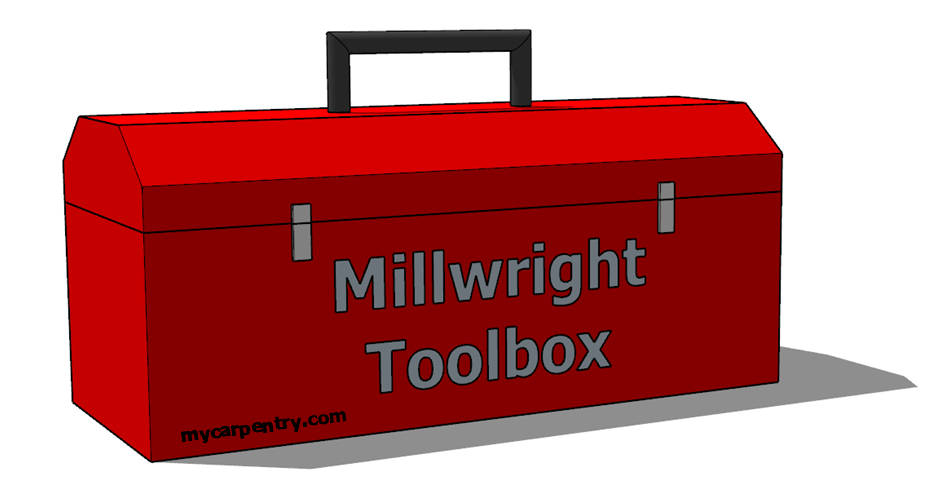
I found the need for a new hand-carry toolbox geared toward millwright work, containing a screwdriver and socket set with a variety of sockets and drivers, as well as a supply of assorted sheet-metal screws and drill bits. When my occupation of the day was setting up factory equipment, it was the only toolbox I needed.
On a Monday morning, I met Charles and Bill at the shop. The three of us hopped into the cab of Charles's truck, with Bill riding shotgun and me sitting in the middle. Charles had been quiet, but suddenly spoke.
"Matt, I wanted to let you know that this will be my last week at AGC. I have decided to take another job and move my family back to Wisconsin."
"Really? Are you kidding?" I said.
"Yeah, now yer gonna have to kiss MY butt, you little wiezel," Bill said.
"What a nice thought," I said morosely.
"Bill is...he has...well...experience," Charles said, trying to think of something good to say about Bill. "You will learn a lot from him."
"Yeah, you're going to have to do every thing I say," Bill hollered as if I wasn't sitting right next to him.
I was sorry to hear about Charles leaving, but I always thought he was out of place working for AGC; it had to have been rough sharing responsibilities with that miserable bozo, Bill Jett. Charles was polite and refined. By contrast, Bill's people skills likely blossomed from doing time in a state penitentiary, as he, himself, was likely a hardened criminal.
Curiously, after Charles left the company, Bill became subdued. Perhaps he was intimidated by Charles and acted out his frustrations by playing the transcendent jackass. It may have been the added responsibility that turned him around. I don't know. But he changed a little, and I didn't complain.
One morning, he showed up early for a customer meeting with a sizable circular yellow stain on the crotch of his jeans.
"What happened, Bill," I asked.
"I spilled coffee on my stinking lap this morning, but it doesn't matter. Who cares?"
"Bill, it looks, without question, like you pissed yourself," I said. "You don't live too far away. Why don't you go home and change? I'll buy some time with the customer."
"Does it look that bad?" Bill asked, sounding surprisingly vulnerable.
"Yeah, man, go change," Jeff said. "We know it's coffee, but the customer-"
"Yes, the customer will think it is piss," I interrupted. "You don't want them to think that you care so little about their opinion that you didn't bother to make yourself more presentable."
Bill grumbled, started his truck, and drove off. Twenty minutes later, he returned wearing a smile and a new pair of jeans.
Mark returned to the workforce the following week after being out for nearly two months.
"Matt, I want you to meet Mark. He is our lead carpenter," Jeff said, as though it were my first day on the job. "You will be working for him on all upcoming jobs."
I thought I was a lead carpenter. Why would I be working with Mark? I thought.
"It is good to meet you, Mark," I said.
"Yo," Mark responded.
Yo? It was clear Mark wasn't trying to impress me. Charles left, and now this guy? What's next?
"Don't worry," Bill said. "Mark is even stupider than you."
Bill had a way of delivering a compliment while simultaneously disparaging your credibility.
"Thanks, Bill," I said. "It's nice to know I'll have a little company."
Bill laughed.
Jeff shook his head.
Mark sneered.
"Let's get to work," Mark said. "Matt, meet me at Building C. We are building new partition walls today."
I met Mark at the job site, where we began toting our tools into the building.
"Matt, I want you to keep me supplied with track and studs while I build walls."
"That won't take long. I can also build walls," I said. "Why don't we each get the material we need and build separate walls, divide and conquer?"
"I already told you what I wanted you to do," he said deadpan.
"Okay, Mark."
I hopped on a forklift, gathered enough material to construct all the walls we planned to build that day, and staged them where they would be easily accessible. Afterward, I put on my toolbelt to prepare for wall assembly.
"Stop what you are doing. I don't want you to build walls. I want you to get materials for me when I need them, nothing more, nothing less."
"Okay, you're the boss," I said, "but I'm going to be twiddling my thumbs most of the time, starting right now. I've already brought all the material we need for the day. I might as well go home."
"You let me worry about that," Mark said.
Some people take to leadership naturally. Mark was not one of them. I had only known him for an hour and had already observed that he lacked common sense, planning, organizational, and people skills. It is illogical for a worker to stand around and do nothing.
Around mid-morning, Jeff arrived. He looked around.
"Is this all you guys have gotten done? Matt, why aren't you building walls with Mark?" I shrugged.
"Ask Mark, he's the boss," I said. "I wanted to build walls, but he said no."
Jeff looked at Mark, and Mark looked at me as though I had just tattled on him.
"Matt, get some material and start building the offices across the hall," Jeff said. "That way, you won't get in each other's way."
"That's a good idea," I said.
I left Jeff and Mark and went to work in another room. I heard them talking, but could not discern their conversation over the sound of the air conditioning system and other workers in the building. It was all starting to make sense. There was history between them. Jeff was the one who had greased Mark into the lead position, for which he was not qualified.
After about fifteen minutes, Jeff left. Mark stayed in his court and didn't speak to me until the end of the day, when he walked into my area.
"You have been busy!" Mark said. "I think you have built more walls than me."
"Thanks, Mark," I said.
"Let's call it a day and meet back at the shop tomorrow morning," Mark said. "Bill wants us to pick up a forklift at Building A and bring it back to the shop."
***
While packing our tools, I received a message on my voice pager clipped to my belt: 'Matt, call Connie when you can.' I rarely got messages on my pager, and it was a miracle that I heard Connie's over the noise in the building. My old voice pager lacked features. There was no way to replay messages or determine their origin. If you miss a message? Tough tamales. I located a wall phone in one of the offices.
'Hi, Connie. Did you call?'
'Yes. I wanted to know if you wanted to go out to eat at Tokyo Steak House tonight.'
'Sure, what's the occasion?'
'Nothing special. I haven't seen you since your last night at the hospital and would like to talk.'
I went home to shower and change clothes, then met her at the restaurant at seven o'clock. She looked gorgeous in her long black dress and heels, contrasting with my 501 jeans, blue golf shirt, and white leather tennis shoes. In the 1980s, there weren't any restaurants in Austin where you couldn't wear jeans and a T-shirt. Is this a date? We had always been friends, but maybe she wanted to take it up a notch. She was wearing a dress, after all. But she always wore dresses, so I shelved the thought. As I recall, she had a boyfriend, anyway. I think his name was Gene. We had steak and shrimp for dinner and two margaritas while we caught up with each other's lives.
"Matt, do you ever think about coming back to work at the hospital?"
"Never say never, I always say, but I doubt I ever would. I like working in the construction world."
"Do you want to come to my house and watch a movie tonight?" she said after the second drink. "I rented a movie today titled 'Nudes.' It might be good."
"That sounds interesting," I said. "Who is in it? What is it about?"
"I don't know."
She smiled.
"Is Gene going to be there?"
"No. We broke up."
"I'll meet you at your house."
I was sure she rented the movie because of the title, thinking the nude scenes might inspire romance. However, it turned out to be about art and the various media and tools used to create nude sculptures, paintings, and drawings. Unless you were a working artist, the movie was boring.
We fell asleep on the couch about midway through the film and woke up around midnight.
"It is too late for you to drive home. Why don't you stay the night?" she said.
"Where will I sleep?"
"With me, silly."
After very little sleep, I woke up around 6 a.m. and told her I needed to head to work.
"Before you leave, I have a question for you," she said.
"Sure."
"I am living in this big house, alone now, and I was wondering if you would be my roommate? I would feel a lot better with a man around."
There it was. That was one of those decision-making moments that can change your life forever. I knew that if I said 'yes,' it would mean roommates with a built-in relationship. Connie was beautiful, but we didn't love each other - we were friends. I could see it getting ugly if one of us decided to move out.
"I'm sorry, Connie, I just signed a new lease with the owner of my house on Stillwood. I won't be able to move for six months without breaking the agreement."
"Are you sure?"
"Yes," I said, scrambling to tie my shoes. "Can we talk later. I need to head out or I will be late for work."
"Okay," she said with disappointment.
I kissed her and left. Later, I heard through mutual friends that she found a roommate. He was a handsome fellow from the hospital. I was happy for her, but it turned out that he was not looking for a relationship, at least not with a female.
***
I arrived 10 minutes early at Building A to help Mark pick up the forklift. Mark was already there with a flatbed trailer attached to a dually pickup. Mark and I located the forklift in the building and drove it to the loading docks, down a concrete ramp, to the parking lot. Mark attached a couple of portable steel ramps to the back of the trailer and drove the machine onto the middle of the trailer. He set the parking brake, wrapped a chain around the mast, secured both ends of the chain to the front of the trailer, and stowed the ramps in the pickup bed.
"Follow me back to the shop," Mark said.
"Aren't you going to chain the back of the forklift to the rear of the trailer?" I said.
"No! It is fine the way it is!"
"If you have to stop suddenly, the forklift will fly forward with nothing to stop it," I said.
"You don't know everything, Matt. It'll be fine. Just don't worry about it."
"Okay, it'll be your butt in a sling if that machine lands in the street on its side."
"We don't have that far to go. I will take it slow."
We arrived at the shop around mid-morning. Mark backed the trailer to one of the bay doors and reattached the ramps. Jeff had been taking inventory of supplies, then abruptly stopped what he was doing. The forklift had moved forward a few inches, causing slack in the chain that caught Jeff's eye.
Suddenly, Bill burst out of his filthy office and stormed toward us.
"Who the hell chained this forklift to the trailer!" he said, looking at both of us. "This piece of junk could have come loose and killed someone!"
I shrugged my shoulders and shook my head.
"It wasn't going anywhere," Mark said. "The brake was set."
"You've got a lot to learn, boy," Bill said. "That gotdam brake won't stop a thing!" he continued. "It's your fault too, Matt. You shouldn't have let this knucklehead leave the dock without the machine secured properly."
I knew he was right, but I kept quiet. I felt embarrassed for Mark. I knew, in his heart, that Mark thought the forklift was attached to the trailer correctly. Bill could have shown him the proper way to strap the machine if he genuinely cared, but he didn't. He just jumped in his pickup and squealed off. Jeff remained silent throughout the interaction - he had something else on his mind.
Mark and I unloaded the forklift and parked it inside the building without uttering a word. Jeff finally broke his silence.
"Mark and Matt, I know it is only Wednesday, but I'm going to have to give you guys a couple of unpaid days off; we don't have any more work until next Monday."
"That sucks," Mark said. I nodded.
Well, there it was. Even the mainframe server company was feeling the economic pinch. It was the first time since I began working for AGC that we hadn't worked a 40-hour week. I wondered why Charles moved back to Wisconsin; maybe he saw slower times ahead.
"Matt, you used to drive an 18-wheeler, right?" Jeff said.
"Yes."
"Do you still have your commercial driver license?"
"Yes."
"Good. On Monday, we need to hook a flatbed trailer onto AGC's Freight Liner, drive it to the train station, load up a big-ass generator, haul it to Building C's dock, drag the contraption off the trailer with a forklift, and install it in one of the mechanical rooms. Can you drive a 13-speed?"
"Yes. I drove one for two years," I said.
"Mark, you can drive the forklift," Jeff said. "Let's meet back here Monday morning. This is Bill's job. He will be running the show."
"That should be fun," I said facetiously.
On Monday morning, we met at the shop. Bill was in one of his moods.
"Hey, jackass, you better not wreck our only flatbed truck!"
"Are you talking to me?" I asked.
"Who the hell else would I be talking to?"
"I'll be careful, Bill. Don't worry."
I loaded my millwright's toolbox and a level into the passenger floorboard of the old rig, climbed into the driver's seat, and fired up the diesel engine. The semi was a rickety, rust bucket, with a filthy cab littered with fast-food wrappers - like Bill's pickup - but the engine seemed solid.
"Jeff, you ride with me in my truck," Bill said, "and you, skeezix, can ride in the 18-wheeler with the jackass. We'll stay in touch on the CB, channel 5. Follow me to the train yard. It is about ten miles away. Try to keep up!"
We nodded and climbed into the cab of the clattering diesel.
"I'm confused, Mark. Are you skeezix or jackass?"
"That Bill is something else," Mark said, shaking his head in disgust.
I released the air brake, depressed the clutch, put the transmission into second gear - remembering that first gear was a 'granny' only used when necessary - and then slowly released the clutch. The cab hopped a little as it lurched forward. I hadn't driven a 13-speed in half a decade, but I was sure I could regain the feel.
After running two red lights while trying to keep pace with Bill, we made it to the train yard and employed the warehouse crew to load the machine onto the flatbed trailer. Mark and I chained it down, front to back, and side to side. Bill watched every step, waiting to jump down our throats at the first slip-up.
"You guys did well, for a couple of morons," Bill said. "I'll follow you guys to Building C."
There was something not right about that flatbed trailer. It seemed fine until we added the generator's weight. There was no side-to-side stability. It was missing a pin or something. I had to slow down to a crawl when making turns for fear the top-heavy machine would flip the wobbly trailer.
The last curve into Building C's parking lot was the tightest. There was no way to turn without the trailer's left rear wheels climbing the curb.
"Hurry up, dammit!" Bill yelled over the radio.
I slowed down, put the transmission in first gear, and proceeded cautiously as the driver-side wheels of the flatbed rolled onto the curb. The trailer groaned as the machine leaned hard over to the opposite side. I stopped to ensure it wasn't going to tip.
"What's your problem!" Bill hollered.
"Look, Bill, if this thing flips over, it will be MY fault, not yours!" I hollered back.
That shut him up. When we moved past the curb, the trailer deck leveled out. We backed up to the dock and unloaded the machine without incident. After the four of us leveled and anchored the machine in the building, we packed up our tools and headed back to the shop.
***
"Everyone step inside my office," Bill said. "I have an announcement to make."
That didn't sound good. I looked at Mark and Jeff, raising my eyebrows, as we walked into Bill's office.
"I want each of you to check your vehicles for any company tools you may have in your toolboxes and leave them inside the shop."
"What's going on, Bill," Jeff said.
"We're closing down," Bill said. "Our contract ended with the server company, and they did not want to renew it. They said the work we were doing, they could do themselves, in-house, and save money."
"That's it, then?" Jeff said.
"That's it," Bill said. "You can pick up your final paychecks on Friday."
On Friday, I drove to the shop to pick up my last paycheck (for one day's work). Bill and Mark were there.
"Matt, the server company wants us to tear down a cinder block wall and load the debris into a dumpster. It is a lot of manual labor, but it's work and a time-and-material job. Interested?" Bill said.
"I'm not doing anything else. When do we start?"
"Monday. Mark will be running the job."
"Where's Jeff," I asked.
"He moved on," Mark said.
I met Mark at the job site on Monday, along with four laborers - all college boys out of school for the summer. The company had already demolished the cinder block wall, leaving only a large pile of broken blocks, concrete, and rebar. Mark directed the workers to load a wheelbarrow full of rubble, tote it to a dumpster, then fill another wheelbarrow and repeat the process. A forklift was parked against one of the walls.
"Mark, can we use that forklift?" I asked.
"Yeah, what do you want to do?"
"We can wire a piece of plywood to the forks and use it as an end-loader."
"Go for it," Mark said.
I rigged the forklift and began scooping and dumping the debris into a dumpster. The over-educated laborers used shovels to load material that I couldn't easily scoop with the forklift.
We finished the job, which Bill estimated would take two weeks, in two days. I felt clever to have devised the forklift/end loader solution, but nobody noticed my ingenuity, at least not anyone who could have made a difference; all I essentially did was outsmart myself out of eight days' pay and back to the world of unemployment.
Commercial carpentry work was supposed to be steady and more reliable. I was proven wrong and was disappointed to face unemployment once again; however, the knowledge I gained while installing factory machinery, driving forklifts, erecting office partition walls, working with new materials like metal studs and red iron, fabricating machine parts with sheet metal, and working with a new assortment of tools was valuable on-the-job training experience that I could take to my next position whether a carpenter or millwright.
~ Matt
What next?
Visit our home page - Check out the DYI carpentry resources on mycarpentry.com.
About the Carpenter - Read about the carpenter behind mycarpentry.com.

